
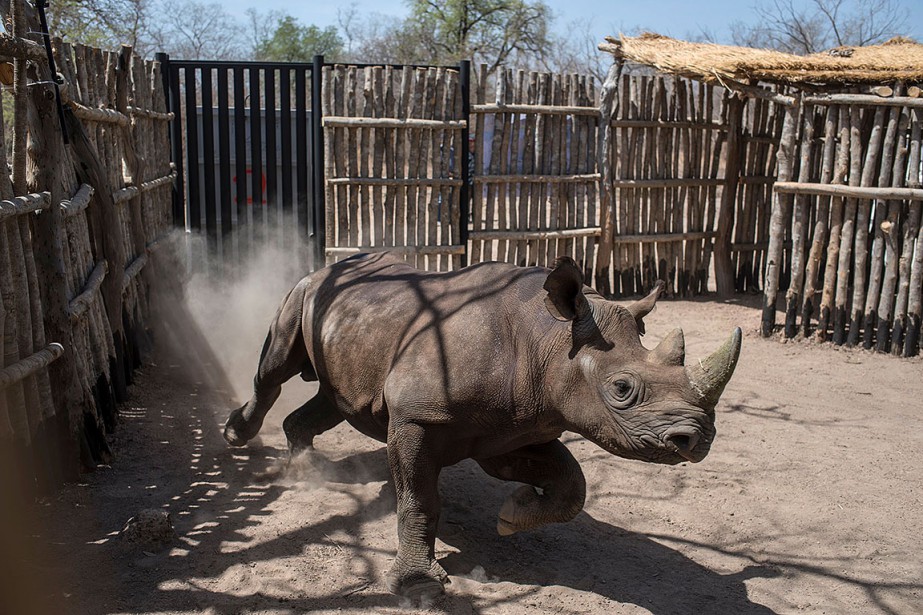

Seventeen black rhinoceroses, a critically endangered species, have been successfully reintroduced to Matusadona National Park. This historic return marks a major milestone for biodiversity conservation in Zimbabwe, thirty years later. The information was made public this Wednesday, June 3, 2026, by African Parks.
This reintroduction crowns the return of an iconic species that once dominated this landscape. Before the rise of mass poaching in the late 1980s and early 1990s, the Sebungwe region, with Matusadona at its center, was home to the country’s largest contiguous population of black rhinoceroses. Faced with the violence of this crisis, the Zimbabwe Parks and Wildlife Management Authority (ZimParks) made the decision to evacuate the last survivors from high-risk areas to relocate them to safer sanctuaries across the country.
An emotion-filled return
For the stakeholders of the time, this transfer is an unexpected achievement. “I was here in the 1990s when we lost them. I participated in the capture of the last survivors; we airlifted them to safety, not knowing if the species would ever return one day,” recalls with emotion Michael Pelham, director of Matusadona National Park. “Matusadona is inseparable from the black rhinoceros. Walking through these landscapes lately, I strongly felt the absence of this icon,” he added.
This large-scale operation fits directly into Zimbabwe’s national rhinoceros strategy. The objective is to establish a founder population capable of contributing, over the next fifteen years, to the establishment of a new metapopulation on a national scale.
“This is a historic event and a source of great pride for Zimbabwe’s conservation efforts,” rejoiced Professor Edison Gandiwa, Director General of ZimParks. “It bears witness to what is possible when the government, conservation organizations, and local partners work in concert toward a common goal,” he concluded.
High-precision logistics
The pachyderms, coming from the Imire Rhino and Wildlife Conservation reserve, the Matobo National Park, as well as another site kept secret, were placed in specially designed crates, then transported by plane to the park located on the shores of Lake Kariba.
Sarah MANGAZA